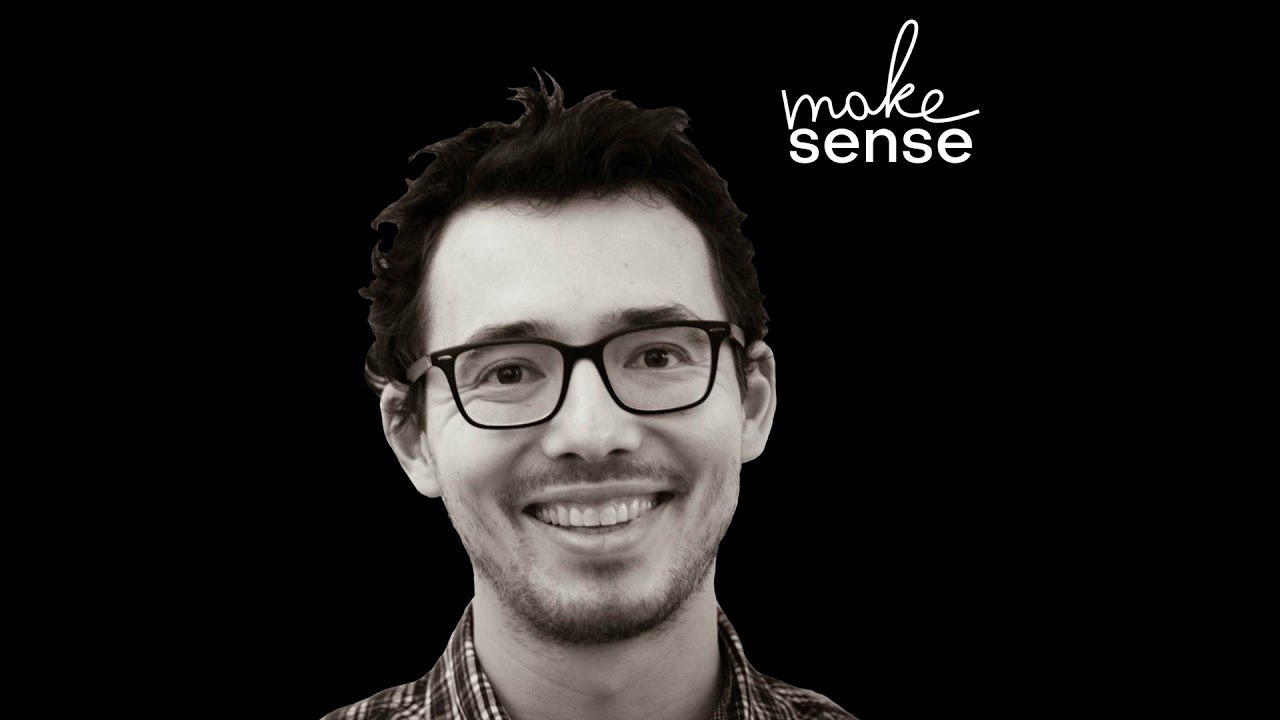
Daniel Stilck Franca - Learning and certification of local time-dependent quantum dynamics and noise
Recorded 14 January 2026. Daniel Stilck Franca of the University of Copenhagen presents "Learning and certification of local time-dependent quantum dynamics and noise" at IPAM's New Frontiers in Quantum Algorithms for Open Quantum Systems Workshop.Abstract: Hamiltonian learning protocols are essential tools to benchmark quantum computers and simulators. Yet rigorous methods for time-dependent Hamiltonians and Lindbladians remain scarce despite their wide use. We close this gap by learning the time-dependent evolution of a locally interacting n-qubit system on a graph of effective dimension D using only preparation of product Pauli eigenstates, evolution under the time-dependent generator for given times, and measurements in product Pauli bases. We assume the time-dependent parameters are well approximated by functions in a known space of dimension m admitting stable interpolation, e.g. by polynomials. Our protocol outputs functions approximating these coefficients to accuracy ? on an interval with success probability 1−δ, requiring only O(?−2poly(m)log(nδ−1)) samples and poly(n,m) pre/postprocessing. Importantly, the scaling in m is polynomial, whereas naive extensions of previous methods scale exponentially. The method estimates time derivatives of observable expectations via interpolation, yielding well-conditioned linear systems for the generator's coefficients. The main difficulty in the time-dependent setting is to evaluate these coefficients at finite times while preserving a controlled link between derivatives and dynamical parameters. Our innovation is to combine Lieb-Robinson bounds, process shadows, and semidefinite programs to recover the coefficients efficiently at constant times. Along the way, we extend state-of-the-art Lieb-Robinson bounds on general graphs to time-dependent, dissipative dynamics, a contribution of independent interest. These results provide a scalable tool to verify state-preparation procedures (e.g. adiabatic protocols) and characterize time-dependent noise in quantum devices.
Learn more online at: https://www.ipam.ucla.edu/programs/workshops/new-frontiers-in-quantum-algorithms-for-open-quantum-systems/ Receive SMS online on sms24.me
TubeReader video aggregator is a website that collects and organizes online videos from the YouTube source. Video aggregation is done for different purposes, and TubeReader take different approaches to achieve their purpose.
Our try to collect videos of high quality or interest for visitors to view; the collection may be made by editors or may be based on community votes.
Another method is to base the collection on those videos most viewed, either at the aggregator site or at various popular video hosting sites.
TubeReader site exists to allow users to collect their own sets of videos, for personal use as well as for browsing and viewing by others; TubeReader can develop online communities around video sharing.
Our site allow users to create a personalized video playlist, for personal use as well as for browsing and viewing by others.
@YouTubeReaderBot allows you to subscribe to Youtube channels.
By using @YouTubeReaderBot Bot you agree with YouTube Terms of Service.
Use the @YouTubeReaderBot telegram bot to be the first to be notified when new videos are released on your favorite channels.
Look for new videos or channels and share them with your friends.
You can start using our bot from this video, subscribe now to Daniel Stilck Franca - Learning and certification of local time-dependent quantum dynamics and noise
What is YouTube?
YouTube is a free video sharing website that makes it easy to watch online videos. You can even create and upload your own videos to share with others. Originally created in 2005, YouTube is now one of the most popular sites on the Web, with visitors watching around 6 billion hours of video every month.