How AI is helping us build real objects | Alexander Kyaw | TEDxCornell
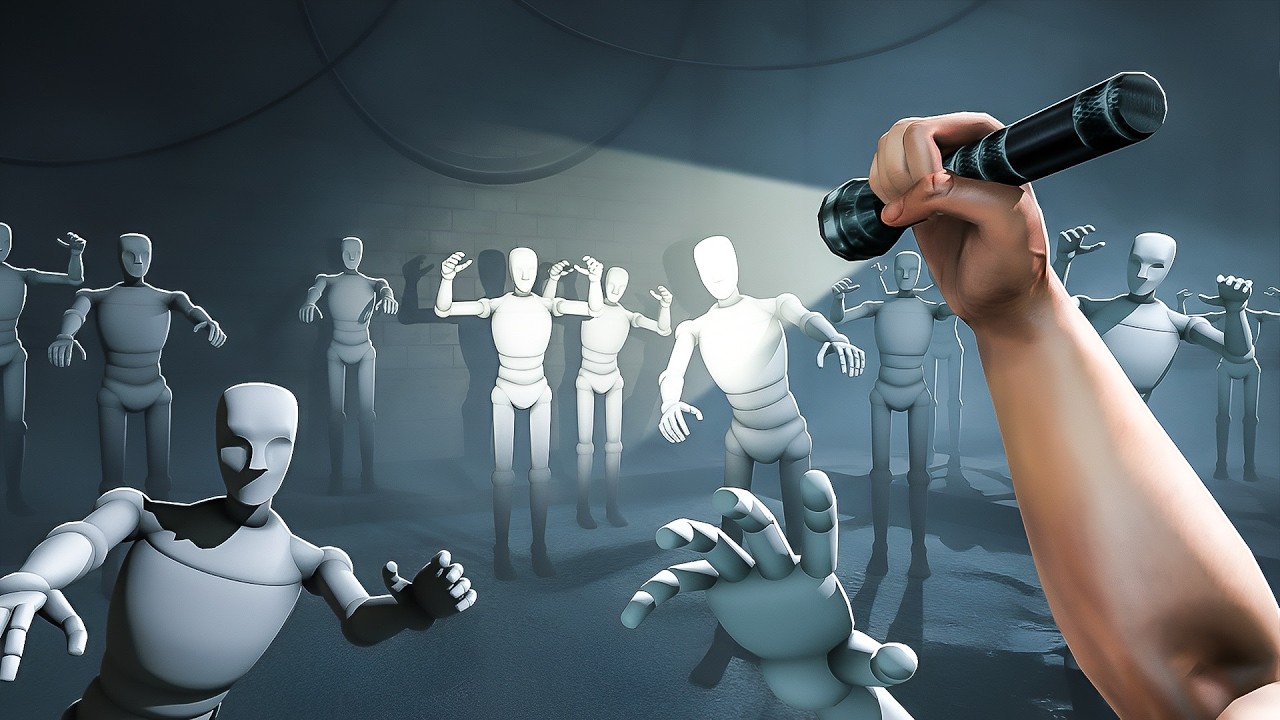
Alexander Kyaw displays how AI, AR, and robots can turn spoken words into physical objects—like saying "I want a chair" and having a robot build it. He also introduces AI-AR Assembly, which enhances creativity by helping users build objects like Legos with interactive guidance, while still keeping your hands involved. Using AI and gesture recognition, Kyaw demonstrates how designing through augmented reality can feel as natural as moving objects in real life. AI isn’t here to replace creativity—it’s here to amplify it and help us co-create with machines in exciting new ways. Alexander is a researcher working at the intersection of artificial intelligence, augmented reality, robotics, design, and fabrication. He is developing systems that enable natural interactions between humans, machines, and the world around us. Alexander's research contributions have been published in Automation in Construction, Architectural Intelligence, the International Conference on Computational Design and Robotic Fabrication, Education and Research in Computer-Aided Architectural Design in Europe, and the Association for Computer-Aided Design in Architecture.Currently, he is a graduate student at MIT in the Department of Electrical Engineering and Computer Science (EECS) and the Department of Architecture. At MIT, Alexander works with the Computer Science and Artificial Intelligence Lab (CSAIL) and the Media Lab. He completed his Bachelor of Architecture degree from Cornell University, where he received a minor in Computer Information Science. At Cornell University, Alexander held research positions in the Robotic Construction Lab. His professional experience includes roles at Autodesk Research, Skidmore Owings & Merrill (SOM), Jenny Sabin Studio, BRIC Architecture, and Proximity Design.
Alexander's design and research have garnered recognition from the American Institute of Architects (AIA), the Museum of Craft and Design, the Land Art Generator Initiative, Google, Amazon Robotics, and the United Nations. Before pursuing his Bachelor's degree in the United States, Alexander was raised in Yangon, Myanmar. He is currently a Steve Jobs Archive Fellow and a co-founder of BendShelters, a social enterprise building easily deployable modular bamboo shelters for refugees in Myanmar.
This talk was given at a TEDx event using the TED conference format but independently organized by a local community. Learn more at https://www.ted.com/tedx Receive SMS online on sms24.me
TubeReader video aggregator is a website that collects and organizes online videos from the YouTube source. Video aggregation is done for different purposes, and TubeReader take different approaches to achieve their purpose.
Our try to collect videos of high quality or interest for visitors to view; the collection may be made by editors or may be based on community votes.
Another method is to base the collection on those videos most viewed, either at the aggregator site or at various popular video hosting sites.
TubeReader site exists to allow users to collect their own sets of videos, for personal use as well as for browsing and viewing by others; TubeReader can develop online communities around video sharing.
Our site allow users to create a personalized video playlist, for personal use as well as for browsing and viewing by others.
@YouTubeReaderBot allows you to subscribe to Youtube channels.
By using @YouTubeReaderBot Bot you agree with YouTube Terms of Service.
Use the @YouTubeReaderBot telegram bot to be the first to be notified when new videos are released on your favorite channels.
Look for new videos or channels and share them with your friends.
You can start using our bot from this video, subscribe now to How AI is helping us build real objects | Alexander Kyaw | TEDxCornell
What is YouTube?
YouTube is a free video sharing website that makes it easy to watch online videos. You can even create and upload your own videos to share with others. Originally created in 2005, YouTube is now one of the most popular sites on the Web, with visitors watching around 6 billion hours of video every month.