No one cares what Booking.com's API runs on. It's GraphQL.
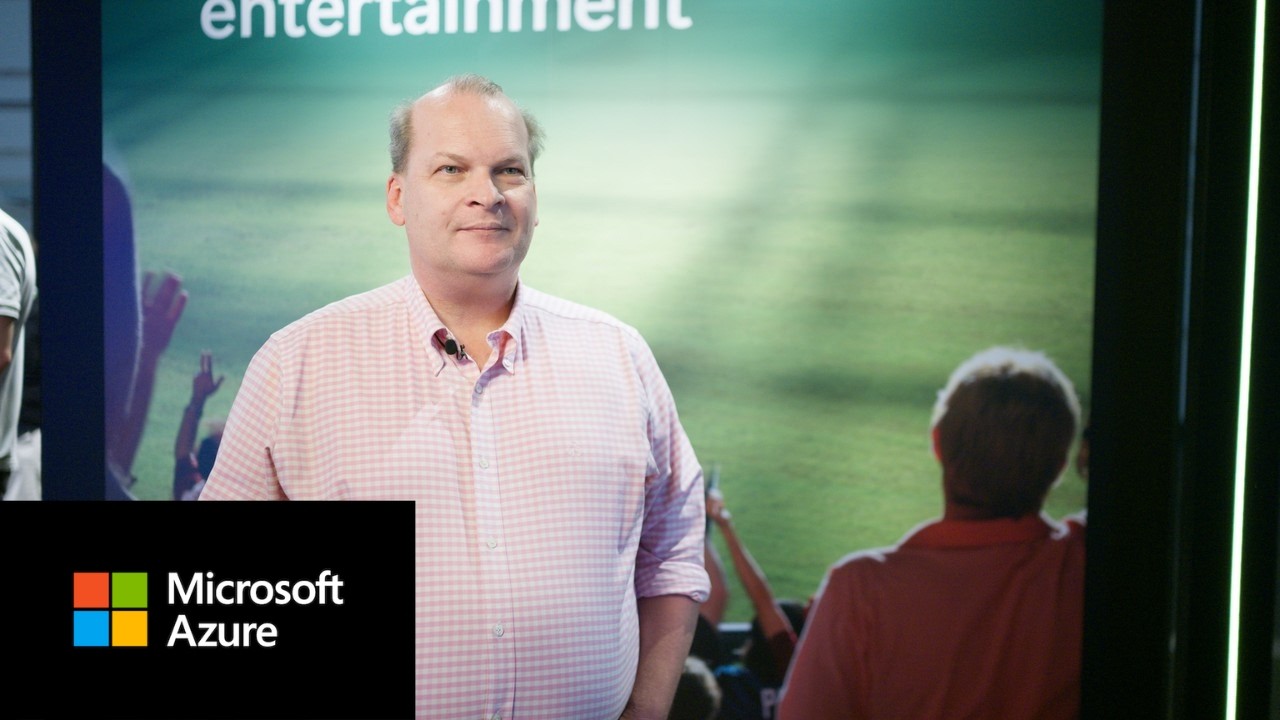
Each of the billion room nights booked on Booking.com every year runs through a GraphQL API layer that handles over 200,000 requests per second. Yet their apps, underlying platform services and now new agentic experiences are driving constant change and evolution. How do they keep up with all that change and scale?In this episode I talk with Chris Ernst, Senior Software Engineer on Booking.com's API platform team, about exactly that. When he joined, three people approved every schema change by hand. Then the API grew 25 times over, and for a stretch nobody was really checking. Now LLMs review schema changes as teams build, and make up realistic test data so front-end teams don't have to wait for the back end.
*In our conversation, we get into:*
1. Using AI agents to map the legacy rules no one person knows anymore
2. How they modernized their original monolith into a federated graph without ruining anyone's vacation
3. Why a platform should never stop changing, and how a steady contract makes that safe
4. The "YOLO period," and the reviews that replaced it
5. Mock data, where LLM hallucination becomes a feature
6. What AI agents get from a typed, connected API, and where MCP fits today
7. Making the case to everyone from the developer to the executive director
8. Why he'd still build a graph today: you can't build on a foundation of sand
Watch to the end for his advice to teams starting out: just go for it, and invest heavily in developer experience.
Chris Ernst, Senior Software Engineer, Booking.com.
*Where to find Chris Ernst:*
- LinkedIn: https://www.linkedin.com/in/christian-ernst11/
- Apollo Summit 2026, From 10k to 200k RPS: https://www.youtube.com/watch?v=KCBNX6YjZpo
*Where to find Dan Boerner:*
- LinkedIn: https://www.linkedin.com/in/dboerner/
- Email the show: onthegraph@apollographql.com
*Related:*
- Apollo GraphQL: https://www.apollographql.com
*In this episode, we cover:*
0:00 No one really cares
0:10 Introduction
1:11 A billion room nights, 250,000 requests a second
2:38 Mapping the legacy rules no one person knows
5:33 A steady contract, and a platform that never stops changing
8:10 Three people approving every schema change
9:33 The YOLO period, and the reviews that replaced it
11:57 Mock data, where hallucination becomes a feature
14:27 What agents get from a typed, connected graph
16:27 Where MCP fits today: a first stepping stone
18:39 Making the case, from developer to executive director
21:16 The job's not finished yet
22:13 Starting over today: would he still build a graph?
23:29 Advice for teams starting out
If you're working to power your AI efforts and APIs are in the way, email me and I'll connect you with other API champions like Chris — onthegraph@apollographql.com
Subscribe for new episodes. Receive SMS online on sms24.me
TubeReader video aggregator is a website that collects and organizes online videos from the YouTube source. Video aggregation is done for different purposes, and TubeReader take different approaches to achieve their purpose.
Our try to collect videos of high quality or interest for visitors to view; the collection may be made by editors or may be based on community votes.
Another method is to base the collection on those videos most viewed, either at the aggregator site or at various popular video hosting sites.
TubeReader site exists to allow users to collect their own sets of videos, for personal use as well as for browsing and viewing by others; TubeReader can develop online communities around video sharing.
Our site allow users to create a personalized video playlist, for personal use as well as for browsing and viewing by others.
@YouTubeReaderBot allows you to subscribe to Youtube channels.
By using @YouTubeReaderBot Bot you agree with YouTube Terms of Service.
Use the @YouTubeReaderBot telegram bot to be the first to be notified when new videos are released on your favorite channels.
Look for new videos or channels and share them with your friends.
You can start using our bot from this video, subscribe now to No one cares what Booking.com's API runs on. It's GraphQL.
What is YouTube?
YouTube is a free video sharing website that makes it easy to watch online videos. You can even create and upload your own videos to share with others. Originally created in 2005, YouTube is now one of the most popular sites on the Web, with visitors watching around 6 billion hours of video every month.