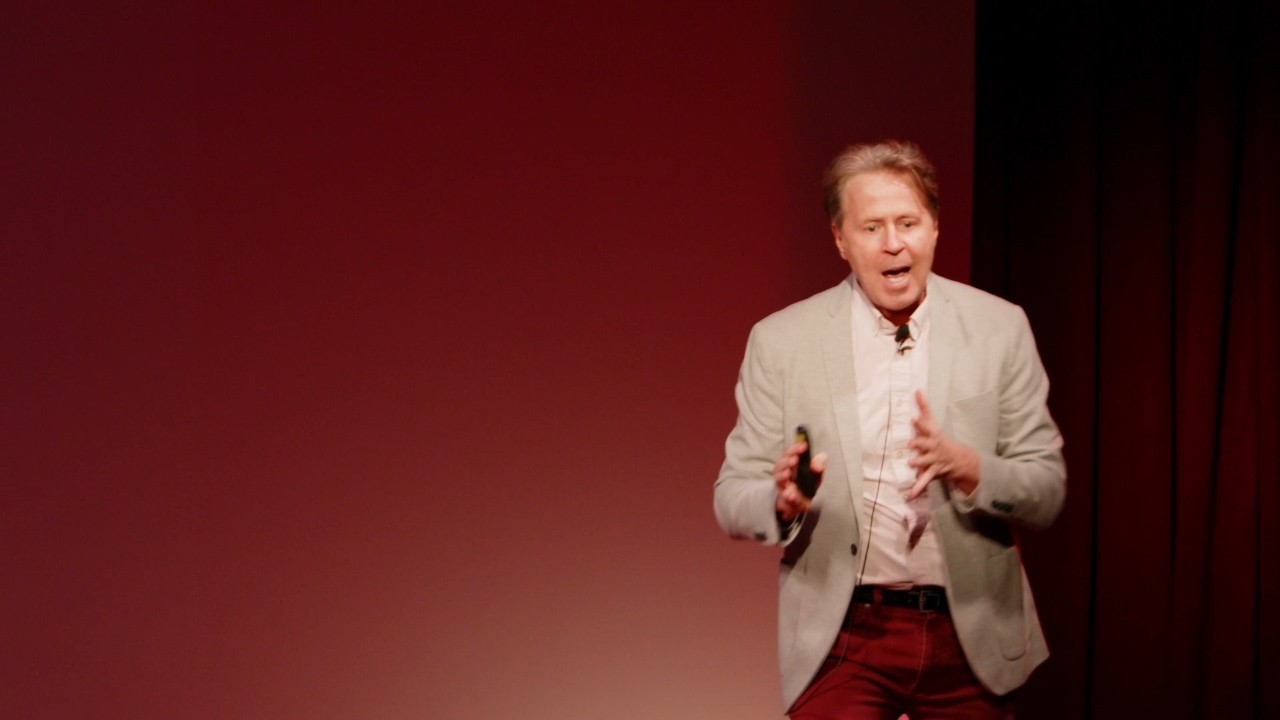
Why your brain is bad at predicting happiness | David Zald | TEDxNashville Salon
Why are we so bad at predicting what will make us happy?In this TEDxNashville talk, Zald explores why pleasure fades, why we underestimate experiences that require effort, and why getting started can be harder than the activity itself.
He also examines the neuroscience of **flow**—the state of complete absorption in which worry and self-consciousness fade—and why meaningful engagement may bring more lasting happiness than pleasure or achievement.
What if our brains weren't designed to keep us happy, but to keep us learning, exploring, and growing?
Perhaps happiness isn't the destination. Perhaps it's what happens when we stop chasing it and become fully engaged in living.
David Zald uses functional neuroimaging and neuropsychological techniques to examine and map the cognitive, affective and sensory functions of the orbitofrontal cortex, amygdala and the mesolimbic dopamine system. This work particularly focuses on understanding the manner in which individual differences in the functioning of these systems contributes to personality and risk for psychopathology. In recent years this work has examined the interaction of emotion and attention, and the substrates of economic decision making, particularly as it relates to motivation, the willingness to expend effort and reward processing, both in healthy individuals and people with certain forms of psychopathology. A final area of focus is the examination of the neural substrates of dimensions of psychopathology, specifically factors of psychopathology that cross the boundaries of different psychiatric disorders. This talk was given at a TEDx event using the TED conference format but independently organized by a local community. Learn more at https://www.ted.com/tedx Receive SMS online on sms24.me
TubeReader video aggregator is a website that collects and organizes online videos from the YouTube source. Video aggregation is done for different purposes, and TubeReader take different approaches to achieve their purpose.
Our try to collect videos of high quality or interest for visitors to view; the collection may be made by editors or may be based on community votes.
Another method is to base the collection on those videos most viewed, either at the aggregator site or at various popular video hosting sites.
TubeReader site exists to allow users to collect their own sets of videos, for personal use as well as for browsing and viewing by others; TubeReader can develop online communities around video sharing.
Our site allow users to create a personalized video playlist, for personal use as well as for browsing and viewing by others.
@YouTubeReaderBot allows you to subscribe to Youtube channels.
By using @YouTubeReaderBot Bot you agree with YouTube Terms of Service.
Use the @YouTubeReaderBot telegram bot to be the first to be notified when new videos are released on your favorite channels.
Look for new videos or channels and share them with your friends.
You can start using our bot from this video, subscribe now to Why your brain is bad at predicting happiness | David Zald | TEDxNashville Salon
What is YouTube?
YouTube is a free video sharing website that makes it easy to watch online videos. You can even create and upload your own videos to share with others. Originally created in 2005, YouTube is now one of the most popular sites on the Web, with visitors watching around 6 billion hours of video every month.