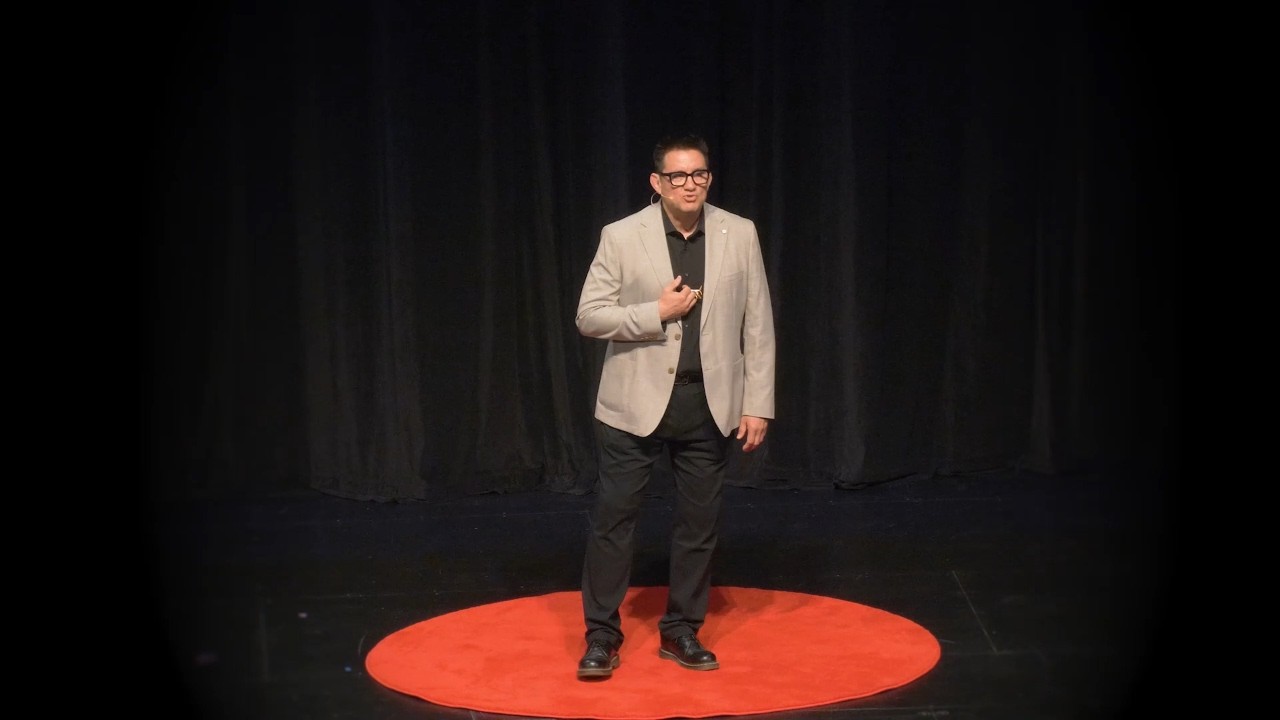
One Swab. One Life. | Dr. Richard Sheppard | TEDxFargo
NOTE FROM TED: TEDx events are independently organized by volunteers. The guidelines we give TEDx organizers are described in more detail here: http://storage.ted.com/tedx/manuals/tedx_content_guidelines.pdfEvery year, thousands of patients with blood cancers like leukemia are told their best chance at survival is a stem cell transplant — but only if a matching donor can be found. The match isn't random. It's genetic, and it depends heavily on ancestry. Patients from communities that are underrepresented in the donor registry face much lower odds of finding a match. The registry simply doesn't reflect the full diversity of patients who need it. I'm a stem cell transplant physician, and I see this gap every day. But I also see something else: a solvable problem. A cheek swab takes 30 seconds. The science to match donors to patients already exists. What's needed is more people — from all backgrounds — saying yes. My talk will walk the audience through the biology of matching, the human stakes behind the shortage, and a community-based initiative I'm building here in North Dakota to grow the registry. I'll share what this work has taught me about medicine beyond the clinic. The ask at the end is simple: register as a donor. One swab. It could be someone's only chance. Dr. Richard Sheppard is a triple board-certified hematologist and medical oncologist at Sanford Roger Maris Cancer Center in Fargo, where he specializes in stem cell transplantation, CAR-T cell therapy, and blood cancers. Originally from the Caribbean, he trained at Mount Sinai Tisch Cancer Center and Memorial Sloan Kettering Cancer Center. He is an assistant professor at the University of North Dakota School of Medicine & Health Sciences, a recipient of the American Society for Transplantation and Cellular Therapy's New Investigator Award, and a grant-funded clinical researcher studying the long-term cognitive effects of cellular therapies.
As a transplant physician, Dr. Sheppard sees firsthand the life-or-death consequences of finding, or not finding, a genetic match for patients with blood cancers. He is leading the development of the region's stem cell transplant and cellular therapy program and advocates for a more diverse national donor registry through a community-based initiative in North Dakota.
He believes some of medicine's biggest challenges can be solved when communities choose to participate, and that for many patients, that starts with a single cheek swab. This talk was given at a TEDx event using the TED conference format but independently organized by a local community. Learn more at https://www.ted.com/tedx Receive SMS online on sms24.me
TubeReader video aggregator is a website that collects and organizes online videos from the YouTube source. Video aggregation is done for different purposes, and TubeReader take different approaches to achieve their purpose.
Our try to collect videos of high quality or interest for visitors to view; the collection may be made by editors or may be based on community votes.
Another method is to base the collection on those videos most viewed, either at the aggregator site or at various popular video hosting sites.
TubeReader site exists to allow users to collect their own sets of videos, for personal use as well as for browsing and viewing by others; TubeReader can develop online communities around video sharing.
Our site allow users to create a personalized video playlist, for personal use as well as for browsing and viewing by others.
@YouTubeReaderBot allows you to subscribe to Youtube channels.
By using @YouTubeReaderBot Bot you agree with YouTube Terms of Service.
Use the @YouTubeReaderBot telegram bot to be the first to be notified when new videos are released on your favorite channels.
Look for new videos or channels and share them with your friends.
You can start using our bot from this video, subscribe now to One Swab. One Life. | Dr. Richard Sheppard | TEDxFargo
What is YouTube?
YouTube is a free video sharing website that makes it easy to watch online videos. You can even create and upload your own videos to share with others. Originally created in 2005, YouTube is now one of the most popular sites on the Web, with visitors watching around 6 billion hours of video every month.