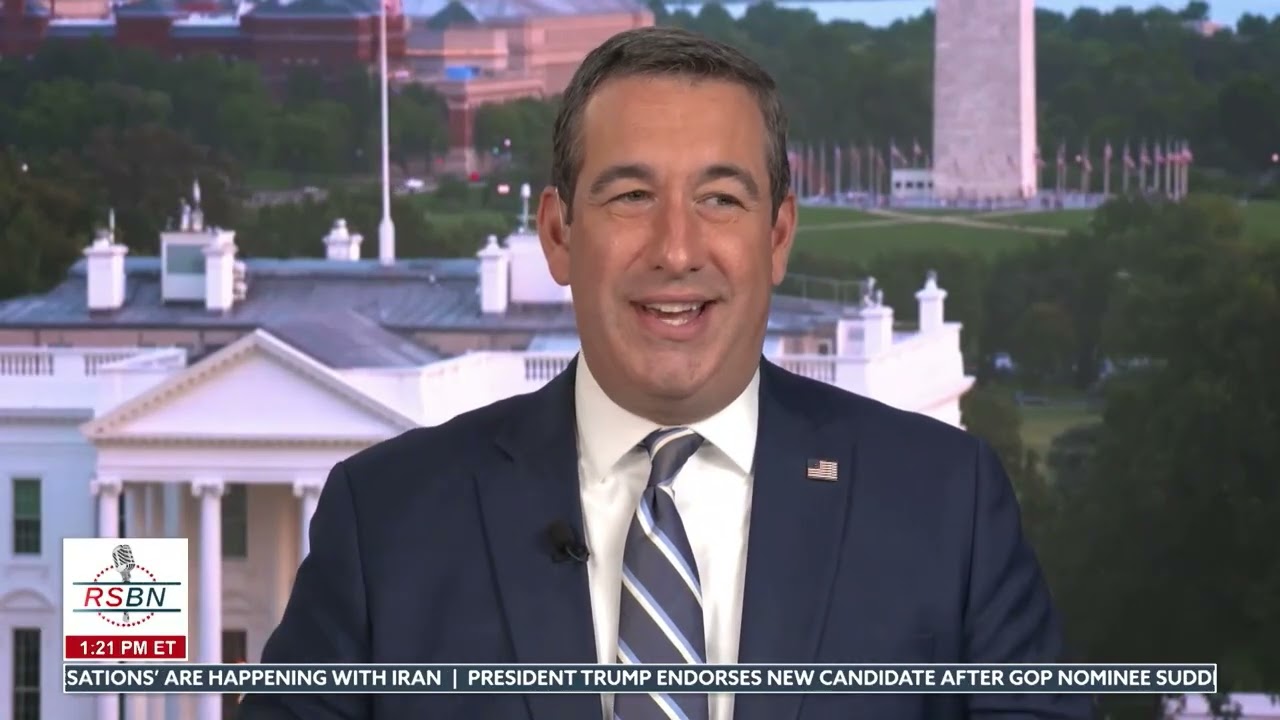
Don’t be data poor — Anuj Iravane, Anterior
Roughly 70% of medical communication still moves by fax. What reaches Anterior is scanned fax bundles that can run past 300 pages, carrying handwriting, checkboxes, tables and images across one patient's entire clinical trajectory. Anuj Iravane calls it an observation through a fuzzy lens over a lifespan. It is exactly the data his evals need, and the data he is least allowed to keep: their contracts rule out retaining it, deriving from it, or holding redacted or anonymized copies. Nothing survives into a dataset. In a domain where 95% accuracy is not good enough, that is a real problem.So they generate it, by running the inference workflow backwards. The forward task takes unstructured data plus a policy, follows a reasoning trace and arrives at a label. Reversed, you sample a label, sample a reasoning trace, then build the record that would have produced it. That works because Anterior already models policies explicitly as decision trees, so traces come from a far more uniform distribution than a model asked to invent variety, which tends to collapse onto the same few cases. A coarse to fine pipeline layers patient invariants into a journey of provider encounters, then fans out into documents, with a consistency eval catching contradictions between documents written in parallel. Because generation starts from the label, labels are correct by construction and ground truthing disappears. Clinicians own the pipeline as skills rather than code. Roughly 90% of their datasets are now synthetic, and in a blind review clinicians separated synthetic from real only about 60% of the time.
Speaker info:
- https://x.com/anujiravane
- https://www.linkedin.com/in/anujiravane/
- https://www.anterior.com/
Timestamps:
0:00 - Policy guided decisions over highly unstructured data
1:05 - Most medical communication still arrives by fax
2:11 - Why 95% is not good enough
2:37 - The data you need most is the data you cannot keep
3:05 - Betting on generating it instead
3:55 - Why one shotting a 300 page record fails
5:00 - Reversing the forward task
5:51 - Policies as decision trees you can sample from
7:19 - Testing the edge cases production data never had
8:09 - Building a record coarse to fine
9:54 - The refinement loop and the round trip check
11:09 - Why it never becomes a PDF
11:34 - Giving clinicians the keys through skills
14:12 - Results, and datasets built just in time Receive SMS online on sms24.me
TubeReader video aggregator is a website that collects and organizes online videos from the YouTube source. Video aggregation is done for different purposes, and TubeReader take different approaches to achieve their purpose.
Our try to collect videos of high quality or interest for visitors to view; the collection may be made by editors or may be based on community votes.
Another method is to base the collection on those videos most viewed, either at the aggregator site or at various popular video hosting sites.
TubeReader site exists to allow users to collect their own sets of videos, for personal use as well as for browsing and viewing by others; TubeReader can develop online communities around video sharing.
Our site allow users to create a personalized video playlist, for personal use as well as for browsing and viewing by others.
@YouTubeReaderBot allows you to subscribe to Youtube channels.
By using @YouTubeReaderBot Bot you agree with YouTube Terms of Service.
Use the @YouTubeReaderBot telegram bot to be the first to be notified when new videos are released on your favorite channels.
Look for new videos or channels and share them with your friends.
You can start using our bot from this video, subscribe now to Don’t be data poor — Anuj Iravane, Anterior
What is YouTube?
YouTube is a free video sharing website that makes it easy to watch online videos. You can even create and upload your own videos to share with others. Originally created in 2005, YouTube is now one of the most popular sites on the Web, with visitors watching around 6 billion hours of video every month.