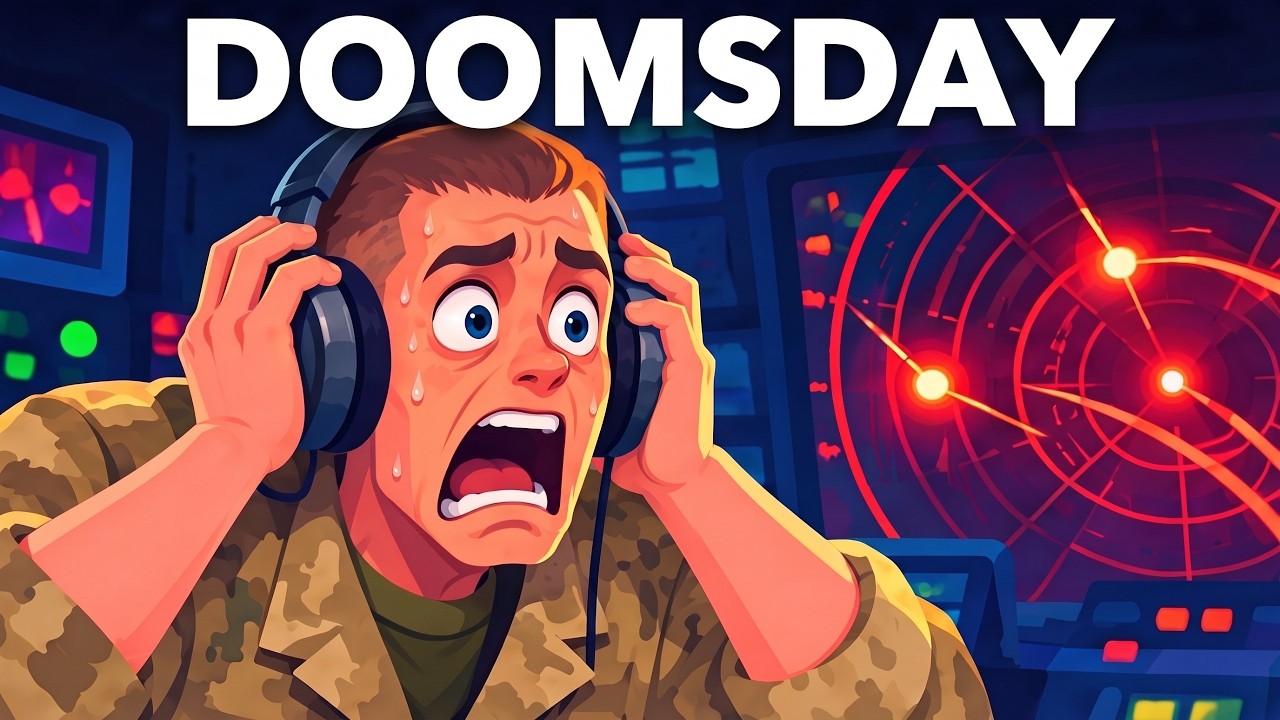
Stanford Course Overview: Validation of Safety Critical Systems (AA228V)
Autonomous systems can't be trusted in the real world until you've found how they fail. In this course overview video for Validation of Safety Critical Systems (AA228V), Stanford's Sydney Katz, Lecturer, and Mykel Kochenderfer, Associate Professor, explain how.Validation of Safety Critical Systems (AA228V) is open now for winter quarter enrollment: https://stanford.io/AA228V
In this course, you'll learn to:
• Use simulation to find failures in autonomous systems before deployment
• Estimate a system's probability of failure with sampling-based methods such as importance sampling and Markov chain Monte Carlo
• Specify safety properties with temporal logic and verify them with formal methods such as reachability analysis
Commercial aviation is one of the safest places you can be, and Kochenderfer credits decades of disciplined verification and validation. In this conversation, he and Katz cover why that playbook isn't enough for the next generation of autonomy: today's AI systems have too many variables to test the old way.
Both Stanford faculty members make the central claim that you have to understand how a system behaves before it goes out into the world. They show how hard it is to specify what you actually want with a wildfire example. A simulated fleet of firefighting drones was rewarded for every grid cell of fire extinguished, so the drones stayed away from the fire, let it burn across the entire map, and then put out as many cells as possible. Keep watching to understand why the objective looked perfectly sensible, but the optimal solution was exactly what no one wanted.
Browse all available graduate courses: https://stanford.io/Winter-2026
#AISafety #AutonomousSystems #SafetyCriticalSystems Receive SMS online on sms24.me
TubeReader video aggregator is a website that collects and organizes online videos from the YouTube source. Video aggregation is done for different purposes, and TubeReader take different approaches to achieve their purpose.
Our try to collect videos of high quality or interest for visitors to view; the collection may be made by editors or may be based on community votes.
Another method is to base the collection on those videos most viewed, either at the aggregator site or at various popular video hosting sites.
TubeReader site exists to allow users to collect their own sets of videos, for personal use as well as for browsing and viewing by others; TubeReader can develop online communities around video sharing.
Our site allow users to create a personalized video playlist, for personal use as well as for browsing and viewing by others.
@YouTubeReaderBot allows you to subscribe to Youtube channels.
By using @YouTubeReaderBot Bot you agree with YouTube Terms of Service.
Use the @YouTubeReaderBot telegram bot to be the first to be notified when new videos are released on your favorite channels.
Look for new videos or channels and share them with your friends.
You can start using our bot from this video, subscribe now to Stanford Course Overview: Validation of Safety Critical Systems (AA228V)
What is YouTube?
YouTube is a free video sharing website that makes it easy to watch online videos. You can even create and upload your own videos to share with others. Originally created in 2005, YouTube is now one of the most popular sites on the Web, with visitors watching around 6 billion hours of video every month.